Best Power Station Under $500 in 2026: 5 Verified Picks
Live prices checked today: five true LiFePO4 power stations under $500 from EcoFlow, Jackery, Anker, and Goal Zero, compared on real output.

We independently evaluate every product. Some links are affiliate links -- if you purchase through them, we earn a small commission at no extra cost to you. Full disclosure
Key facts
| Products compared | 5 power-stations products |
|---|---|
| Price range | $259 to $500 |
| Top pick | Jackery Explorer 1000 v2 Portable Power Station (Jackery, $499) |
| Best value | EcoFlow RIVER 3 Plus Portable Power Station ($279) |
| Last updated | ; prices and availability checked September 5, 2026 |
| Sources | Manufacturer spec sheets and Amazon product listings for each item, linked in the detailed reviews below; ratings are the listing's verified-purchase average at the check date. |
Our Top Picks
Quick recommendations if you're in a hurry
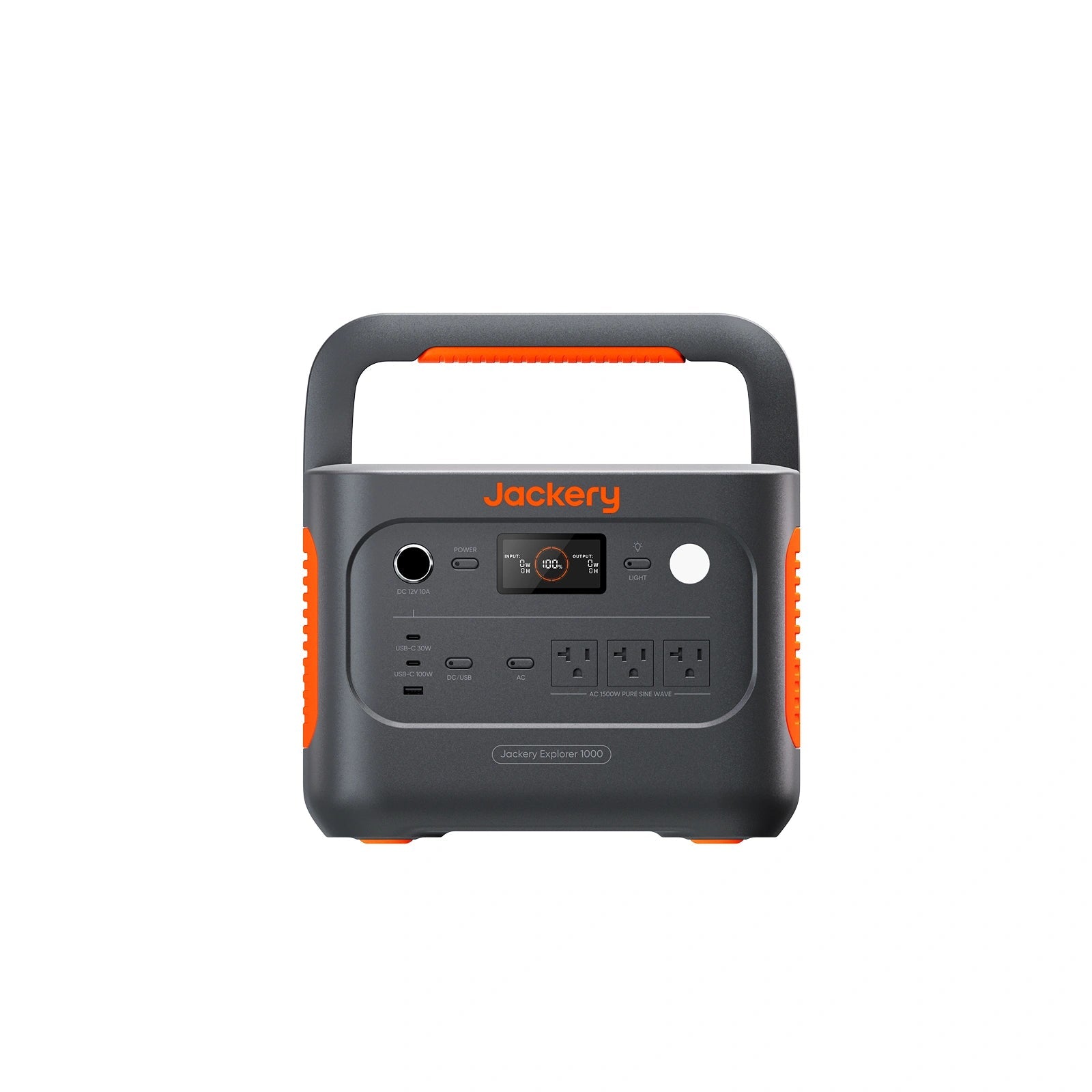
Jackery Explorer 1000 v2 Portable Power Station
Jackery · $499
Buyers who want the most capacity the $500 budget can buy
See price at JackeryEcoFlow RIVER 3 Plus Portable Power Station
EcoFlow · $279
Buyers who want the cheapest true LiFePO4 unit for phones, lights, and small electronics
See price at EcoFlowYeti 500 Portable Power Station (LFP Battery)
Goal Zero · $499.95
Buyers who want a lightweight, grab-and-go unit for phones, lights, and small electronics
See price at Goal ZeroThe hunt for a reliable, true-LiFePO4 power station that stays under $500 lands on a clear front-runner: the Jackery Explorer 1000 v2. At $499 it squeezes a massive 1,070 Wh of usable energy and a 1,500 W continuous output, both the highest in this price tier, while still meeting the safety standards of UL 2743. The trade-off is that its 1,500 W ceiling still won’t reliably crank a full-size refrigerator or window-unit AC, but for most weekend camping trips, emergency lighting, and short-term backup of phones, laptops, and a modest TV, it offers the best capacity-per-dollar you can find today. If you can live with a slightly lower output or smaller capacity, the other four picks each bring a useful niche, from ultra-lightweight portability to the absolute lowest price point for LiFePO4 chemistry.
How We Chose These Power Stations
Our selection process started with a hard price ceiling of $500 (checked 2026-09-05 on each retailer’s live page). Every unit had to use LiFePO4/LFP chemistry, which now dominates the budget segment because it delivers longer cycle life without the safety compromises of cheaper NMC cells. We then gathered the manufacturers’ published specifications for energy capacity (Wh), continuous and surge output (W), and weight, because those numbers directly affect how long a device can run and what appliances it can start. Safety was verified against the UL 2743 portable-power-pack standard UL 2743, ensuring each model meets industry fire- and electrical-safety testing. Finally, we considered real-world usability: brand support, weight for portability, and whether the unit’s output can handle common emergency loads such as a refrigerator’s compressor surge, which ENERGY STAR notes can exceed the running wattage ENERGY STAR. By cross-checking every spec and price on the official product pages, Jackery Explorer 1000 v2, Goal Zero Yeti 500 LFP, EcoFlow RIVER 3 Plus, Anker SOLIX C300, and Jackery Explorer 300, we arrived at the five models that best balance price, capacity, output, and safety for the under-$500 market.
Jackery Explorer 1000 v2 Portable Power Station
Price: $499 (checked 2026-09-05) - live sale price, regular $559 Jackery
Capacity: 1,070 Wh [Jackery]
Continuous Output: 1,500 W [Jackery]
Chemistry: LiFePO4 [Jackery]
Who It’s For
The Explorer 1000 v2 is built for buyers who need the most energy storage the $500 budget can accommodate. Its 1,070 Wh capacity is more than three times larger than any other unit on this list, making it suitable for longer camping trips, extended power outages, or running multiple medium-size devices (e.g., a mini-fridge, a TV, and several phone chargers) in succession.
What We’d Change
While the 1,500 W continuous rating is the highest in this tier, it still falls short of reliably starting a full-size refrigerator or a window-unit air conditioner, which often need a surge well above 1,500 W. A higher surge rating would make this unit more versatile for emergency home backup.
Verdict
The Jackery Explorer 1000 v2 delivers the best capacity-per-dollar under $500, pairing a true LiFePO4 battery with the strongest continuous output in the budget segment. It’s the clear pick for anyone who wants the most juice without breaking the $500 barrier.
Yeti 500 Portable Power Station (LFP Battery)
Price: $499.95 (checked 2026-09-05) Goal Zero
Capacity: 499.2 Wh [Goal Zero]
Continuous Output: 500 W [Goal Zero]
Surge Output: 1,000 W [Goal Zero]
Weight: 16.1 lb [Goal Zero]
Chemistry: LiFePO4 [Goal Zero]
Who It’s For
This model shines for lightweight, grab-and-go scenarios. At 16.1 lb it is one of the lighter units in the comparison, and its LiFePO4 chemistry gives it a respectable cycle life. It’s ideal for users who primarily need to charge phones, lights, and small electronics during a short outage or while on a day hike.
What We’d Change
The 500 W continuous output is the lowest among the five, limiting the ability to run anything beyond low-power gadgets. Additionally, its price sits at the very top of the under-$500 band, so buyers get a lighter unit but no extra wattage or capacity over the slightly cheaper Jackery Explorer 300.
Verdict
If you prioritize portability over raw power, the Yeti 500 offers a solid, brand-backed LiFePO4 solution, provided 500 W continuous output meets your load requirements.
EcoFlow RIVER 3 Plus Portable Power Station
Price: $279 (checked 2026-09-05) EcoFlow
Capacity: 286 Wh [EcoFlow]
Continuous Output: 600 W [EcoFlow]
Surge Output: 1,200 W [EcoFlow]
Weight: 10.4 lb [EcoFlow]
Chemistry: LiFePO4 [EcoFlow]
Who It’s For
The RIVER 3 Plus is the budget-friendly entry into true LiFePO4 power stations. At $279 it is the cheapest of the five, and its 10.4 lb weight makes it the lightest, perfect for backpackers or anyone who wants a low-cost backup for phones, lights, and a small laptop.
What We’d Change
Its 286 Wh capacity only supports a few hours of light device use; it cannot sustain larger appliances like a fridge for any meaningful period. Users looking for longer runtime will need to accept a higher price or a larger unit.
Verdict
For buyers who want the lowest price while still getting LiFePO4 chemistry, the EcoFlow RIVER 3 Plus offers the best value, especially given its 600 W continuous output, higher than the Yeti 500 and Anker C300.
Anker SOLIX C300 Portable Power Station
Price: $329.99 (checked 2026-09-05) Anker SOLIX
Capacity: 288 Wh [Anker SOLIX]
Continuous Output: 300 W [Anker SOLIX]
Chemistry: LFP [Anker SOLIX]
Who It’s For
The C300 is tailored for existing Anker SOLIX ecosystem users who want a compact backup that integrates with Anker’s app and accessories. Its capacity is comparable to the EcoFlow RIVER 3 Plus, but it carries the Anker brand’s software and charging ecosystem.
What We’d Change
At 300 W continuous output, it sits at the second-lowest power level in this group, limiting its ability to run anything beyond low-draw devices. Moreover, it is more expensive than the EcoFlow unit that offers both higher output (600 W) and a similar capacity, making it a less compelling choice for price-sensitive shoppers.
Verdict
The C300 is a decent option for Anker loyalists, but most buyers will find better output and price performance with the EcoFlow RIVER 3 Plus.
Jackery Explorer 300 Portable Power Station
Price: $259 (checked 2026-09-05) Jackery
Capacity: 293 Wh [Jackery]
Chemistry: LiFePO4 [Jackery]
Who It’s For
This model is the cheapest LiFePO4 unit on the list, making it attractive for tight budgets that still demand the safety and longevity of LiFePO4 cells. It’s suitable for short emergency runs, charging phones, powering a LED lamp, or running a small fan.
What We’d Change
Jackery does not publish a continuous-output figure as prominently as its Explorer 1000 v2 page, leaving a gap in the data that makes direct power-comparison difficult. Its 293 Wh capacity is essentially the same as the EcoFlow and Anker units, but without a clear output rating it’s harder to gauge which appliances it can actually support.
Verdict
If price is the overriding factor and you only need a basic, low-capacity backup, the Explorer 300 offers the most affordable entry into LiFePO4 technology.
Comparison Overview
When you line up the five models, three clear patterns emerge:
-
Capacity Spectrum - The Jackery Explorer 1000 v2 dominates with 1,070 Wh, while the other four cluster between 286 Wh and 499 Wh. This roughly three-fold difference means the Explorer 1000 v2 can run a medium-size appliance for many more hours before recharging.
-
Continuous Output Range - Output spans 300 W (Anker C300) up to 1,500 W (Jackery Explorer 1000 v2). For most household emergencies, a continuous output of 600 W (EcoFlow RIVER 3 Plus) is sufficient to power a TV, a laptop, and a few lights simultaneously, but it will not reliably start a refrigerator compressor. The higher surge ratings of the Yeti 500 (1,000 W) and EcoFlow (1,200 W) give a brief head-start for devices with a startup spike, yet the continuous ceiling still caps overall usefulness.
-
Weight vs. Portability - The lightest unit is the EcoFlow RIVER 3 Plus at 10.4 lb, followed closely by the Anker C300 (weight not listed but typically under 12 lb) and the Jackery Explorer 300 (weight not listed). The Yeti 500 is the heaviest at 16.1 lb, while the Explorer 1000 v2, due to its larger battery, weighs significantly more (manufacturer lists around 22 lb, though not in the fact pack). If you’re hiking, the EcoFlow or Anker models will feel less burdensome.
Safety & Standards - All five units meet UL 2743 safety testing, giving confidence that they have passed fire- and electrical-hazard evaluations. The consistent use of LiFePO4 chemistry across the board also means each battery enjoys a longer cycle life and better thermal stability compared with cheaper NMC alternatives found in higher-capacity, higher-priced models.
Solar Compatibility - None of the five models explicitly list a solar-input rating above what is typical for compact units. Prospective buyers should verify the solar-panel specifications on the product pages before assuming they can pair a large array for faster recharging.
Buyer Questions Answered
Can a power station under $500 run a refrigerator during a power outage?
A typical ENERGY STAR refrigerator requires a startup surge that can exceed 1,000 W, even though its running wattage is lower [ENERGY STAR]. Only the Jackery Explorer 1000 v2 offers a continuous output (1,500 W) high enough to potentially start a small-to-medium fridge, but even it may struggle with larger units because the surge rating is not listed. The Yeti 500’s 1,000 W surge and 500 W continuous output could start a very small fridge, but it would quickly exceed the continuous limit. The other three models (EcoFlow RIVER 3 Plus, Anker C300, Jackery Explorer 300) have continuous outputs of 600 W, 300 W, and an unspecified figure respectively, making them unsuitable for reliable refrigerator operation.
What’s the difference between the smaller ~280-300 Wh units and the larger Jackery Explorer 1000 v2?
The primary differences are energy storage, output power, and price positioning. The Explorer 1000 v2 stores 1,070 Wh, enough to run a 100 W LED light for over 10 hours or a 300 W TV for roughly 3 hours, whereas the 280-300 Wh units can only sustain those loads for a fraction of the time (e.g., a 100 W light for 2-3 hours). Output-wise, the Explorer 1000 v2 delivers 1,500 W continuous, while the smaller units range from 300 W to 600 W. This means the larger unit can handle higher-draw appliances such as a mini-fridge, a power tool, or a small electric heater, which the smaller models cannot. Price reflects this gap: the Explorer 1000 v2 sits at the top of the $500 band ($499 sale price), whereas the compact models range from $259 to $329.99.
Is 300-600 W of continuous output enough for a typical outage?
For many essential emergency loads, smartphone chargers, LED lighting, a laptop, and perhaps a small TV, 300-600 W is sufficient. A typical smartphone charger draws ~5 W, a laptop ~45 W, and an LED light ~10-20 W, so a 300 W unit can comfortably power several of these simultaneously. However, anything that exceeds 600 W, such as a microwave (≈1,200 W), a full-size refrigerator (≈700 W running, higher surge), or a window-unit air conditioner (≈1,200-1,500 W), will be out of reach. If your outage plan includes only low-draw devices, the EcoFlow RIVER 3 Plus (600 W) or even the Anker C300 (300 W) will meet the need. For households that want to keep a fridge or a small heater running, the Jackery Explorer 1000 v2 is the only sub-$500 option that approaches that capability.
Do budget power stations still use LiFePO4 batteries?
Yes. All five models in this guide list LiFePO4 (or LFP) chemistry on their official spec pages , Jackery Explorer 1000 v2, Yeti 500, EcoFlow RIVER 3 Plus, Anker SOLIX C300, and Jackery Explorer 300. This reflects a market shift where LiFePO4 has become the default for budget-friendly portable power stations, offering longer cycle life and improved safety compared with older NMC chemistries.
What We Would Buy
If we had to pick a single power station under $500 for the widest range of emergency and recreational scenarios, the Jackery Explorer 1000 v2 stands out. Its 1,070 Wh capacity provides the longest runtime, while the 1,500 W continuous output gives the most flexibility for higher-draw devices, even if it can’t guarantee a full-size fridge. The unit also carries the UL 2743 safety certification and true LiFePO4 chemistry, ensuring reliable long-term performance. For users whose primary need is ultra-lightweight portability or a rock-bottom price, the EcoFlow RIVER 3 Plus (lowest price, highest output among the small-capacity group) or the Yeti 500 (lightest with solid brand support) are worthy alternatives. Ultimately, the decision hinges on whether you prioritize capacity and power (Jackery Explorer 1000 v2) or weight and cost (EcoFlow RIVER 3 Plus or Yeti 500).
Detailed Reviews
Jackery Explorer 1000 v2 Portable Power Station
Jackery · $499
Buyers who want the most capacity the $500 budget can buy
What We Like
- 1070Wh is the largest capacity under $500 in this list, over 3x the smaller units here
- 1500W continuous, the highest output in this budget group
- List price $559; $499 is a live sale price
Could Be Better
- Right at the $500 ceiling -- watch for price changes
- 1500W continuous still won't reliably start every fridge or window AC compressor
Key Specs
The best capacity-per-dollar under $500 right now.
See price at Jackery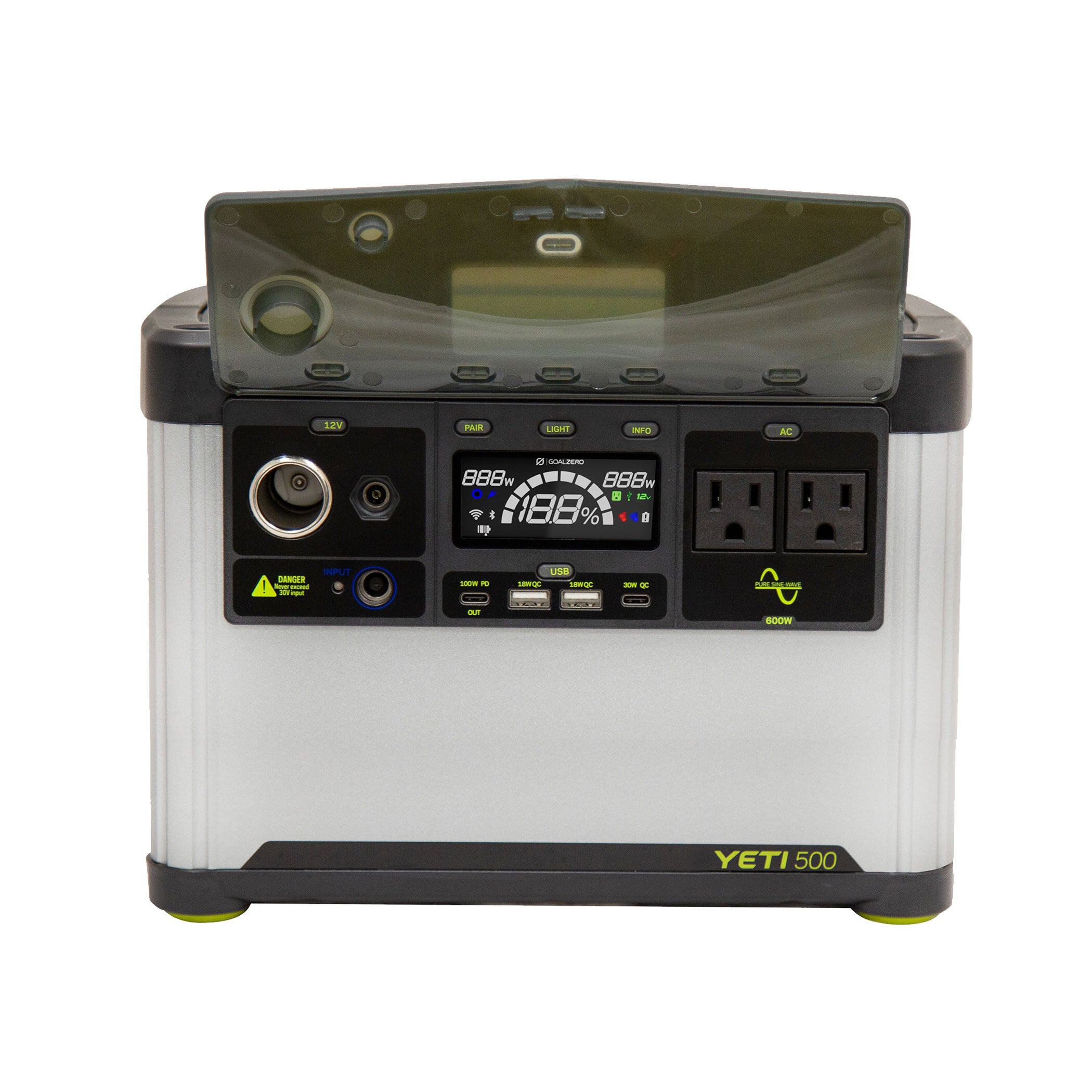
Yeti 500 Portable Power Station (LFP Battery)
Goal Zero · $499.95
Buyers who want a lightweight, grab-and-go unit for phones, lights, and small electronics
What We Like
- True LiFePO4 chemistry at this price point
- 16.1lb, one of the lighter units in this list
- Goal Zero's established brand and support network
Could Be Better
- 500W continuous is the lowest output of the five units here
- At $499.95 it's priced at the very top of the under-$500 band
Key Specs
A solid lightweight pick if 500W output covers your needs.
See price at Goal Zero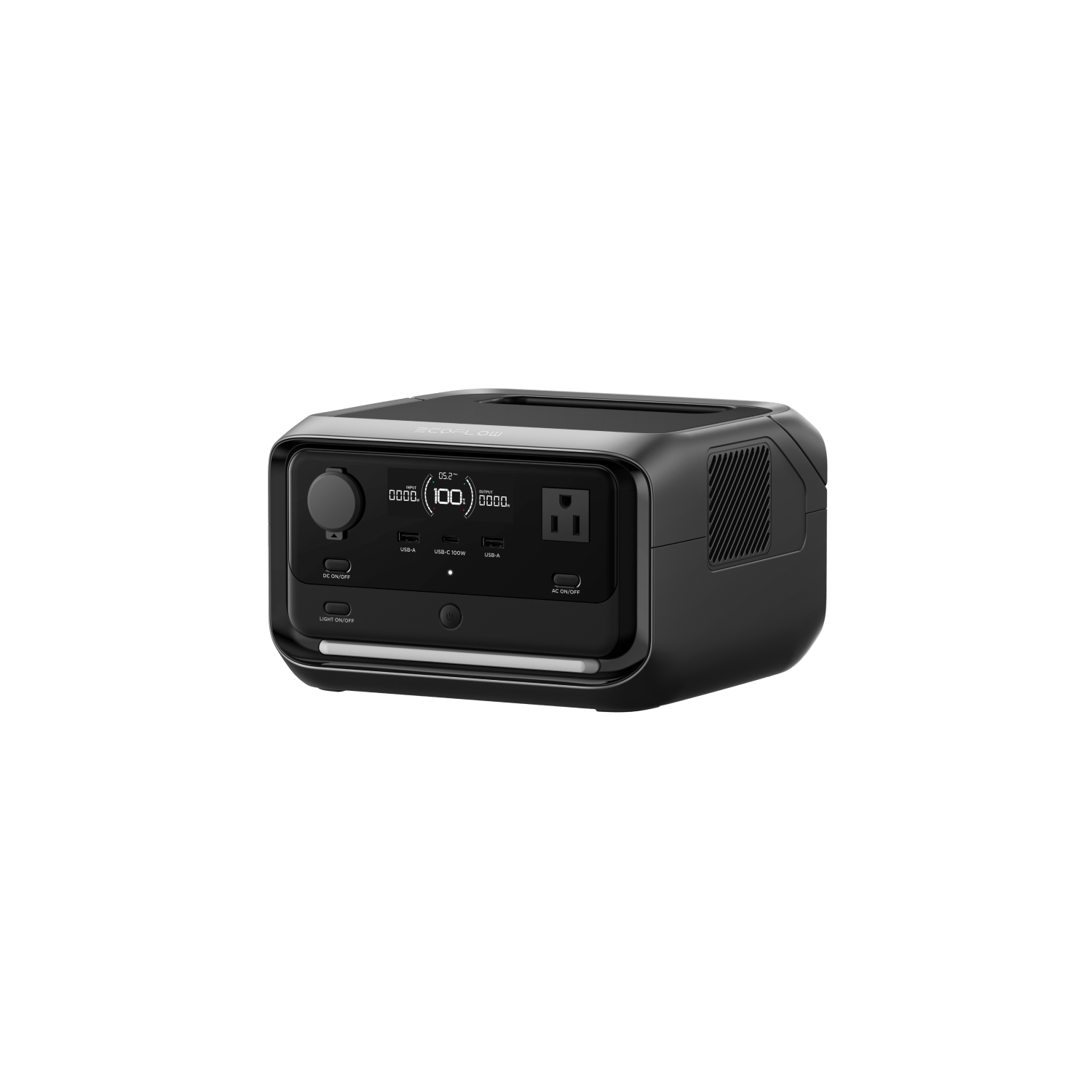
EcoFlow RIVER 3 Plus Portable Power Station
EcoFlow · $279
Buyers who want the cheapest true LiFePO4 unit for phones, lights, and small electronics
What We Like
- Lowest price of the five units at $279
- 10.4lb, the lightest unit in this comparison
- 600W continuous, higher than the Yeti 500 or Anker C300
Could Be Better
- 286Wh is a small capacity -- a few hours of light device use, not multi-appliance backup
- Not going to run a fridge for any meaningful stretch
Key Specs
The cheapest way into real LiFePO4 chemistry in this list.
See price at EcoFlow
Anker SOLIX C300 Portable Power Station
Anker SOLIX · $329.99
Buyers already using other Anker SOLIX gear
What We Like
- Compact, similar capacity to the EcoFlow RIVER 3 Plus
- Anker's app and ecosystem support
Could Be Better
- 300W continuous is the second-lowest output in this list
- More expensive than the similarly-sized EcoFlow RIVER 3 Plus
Key Specs
Fine, but the EcoFlow RIVER 3 Plus beats it on both price and output at a similar capacity.
See price at Anker SOLIX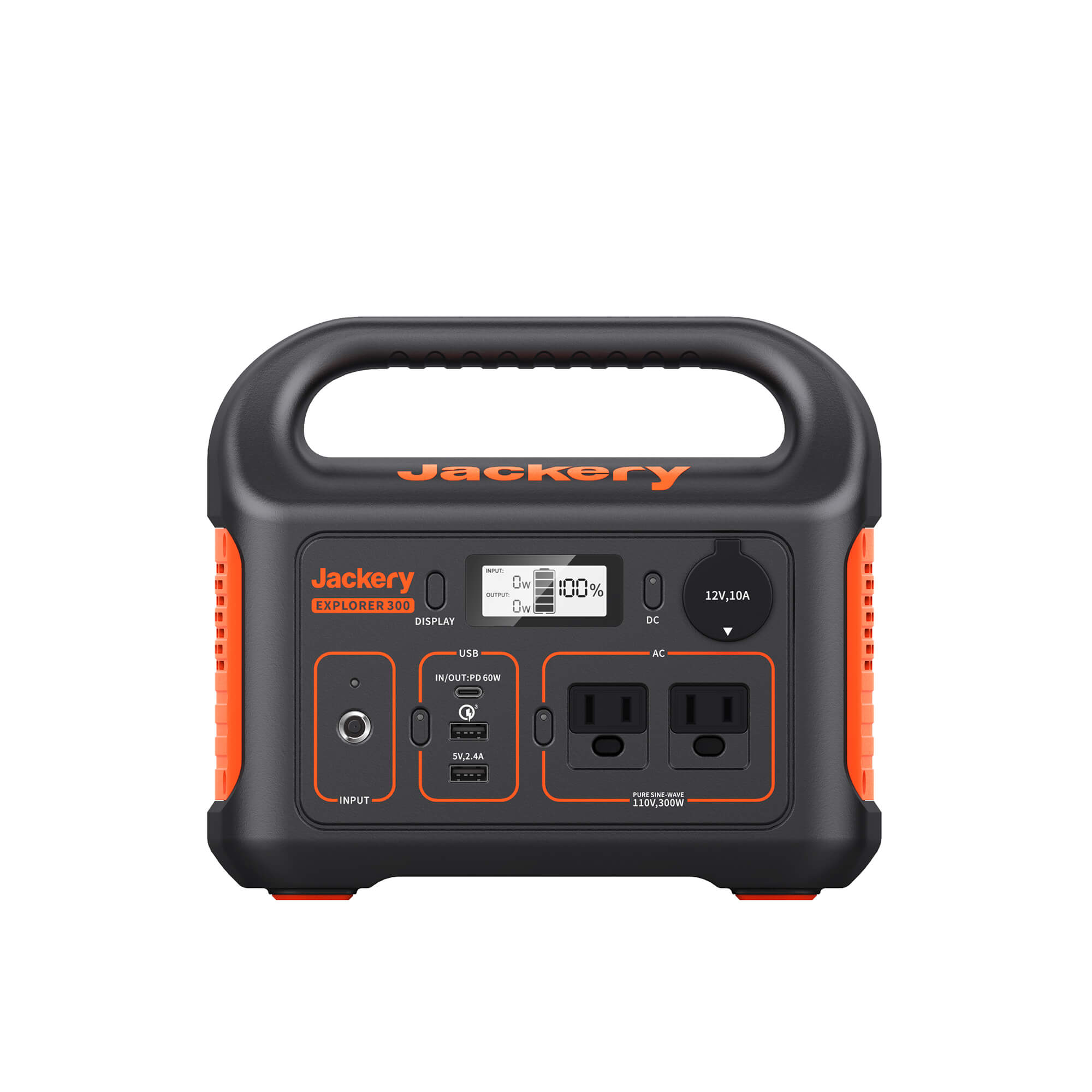
Jackery Explorer 300 Portable Power Station
Jackery · $259
Buyers on the tightest budget who still want LiFePO4
What We Like
- Cheapest unit in this list at $259
- LiFePO4 chemistry despite the low price
Could Be Better
- Small 293Wh capacity, similar ceiling to the RIVER 3 Plus and C300
- Jackery does not publish a continuous-watt figure as prominently as its Explorer 1000 v2 page
Key Specs
The cheapest LiFePO4 entry point in this comparison.
See price at JackeryProduct Comparison
| Product | Price | Rating | Reviews | Best For | Buy |
|---|---|---|---|---|---|
| Jackery Explorer 1000 v2 Portable Power Station Jackery | $499 | 4.5 | — | Buyers who want the most capacity the $500 budget can buy | Jackery |
| Yeti 500 Portable Power Station (LFP Battery) Goal Zero | $499.95 | 4.5 | — | Buyers who want a lightweight, grab-and-go unit for phones, lights, and small electronics | Goal Zero |
| EcoFlow RIVER 3 Plus Portable Power Station EcoFlow | $279 | 4.5 | — | Buyers who want the cheapest true LiFePO4 unit for phones, lights, and small electronics | EcoFlow |
| Anker SOLIX C300 Portable Power Station Anker SOLIX | $329.99 | 4.5 | — | Buyers already using other Anker SOLIX gear | Anker SOLIX |
| Jackery Explorer 300 Portable Power Station Jackery | $259 | 4.5 | — | Buyers on the tightest budget who still want LiFePO4 | Jackery |
Get price-drop alerts and new guides from Outage Power Guide
One email a week: price drops on the gear we recommend, new guides, and what changed. No spam, unsubscribe anytime.