How Many Watt-Hours Do You Actually Need? A Sizing Guide
Size a backup battery by continuous watts, surge watts and hours of backup needed — with real spec-sheet numbers from five power stations, not invented...
We independently evaluate every product. Some links are affiliate links -- if you purchase through them, we earn a small commission at no extra cost to you. Full disclosure
Key facts
| Products compared | 5 buying-guides products |
|---|---|
| Price range | $279 to $3799 |
| Top pick | DELTA Pro Ultra (EcoFlow, $3,799) |
| Best value | RIVER 3 Plus Portable Power Station ($279) |
| Last updated | ; prices and availability checked September 5, 2026 |
| Sources | Manufacturer spec sheets and Amazon product listings for each item, linked in the detailed reviews below; ratings are the listing's verified-purchase average at the check date. |
Our Top Picks
Quick recommendations if you're in a hurry
RIVER 3 Plus Portable Power Station
EcoFlow · $279
Small-load, short-duration backup (electronics, medical devices, communications)
See price at EcoFlowDELTA 3 Max Series Portable Power Station
EcoFlow · $899
A handful of household essentials (fridge, some lighting, a router) through a multi-hour outage
See price at EcoFlowF3800 Plus
Anker · $2,399.99
Households whose continuous-watt math includes a well pump, sump pump, or other high-draw fixed appliance
See price at Anker SOLIXThe short answer is that you size a portable power station by adding up the continuous watts you expect to run, checking the surge watts each device needs to start, and then multiplying that total by the number of hours of backup you want. A unit’s watt-hour (Wh) rating tells you how long it can sustain that load, while its continuous-output rating tells you whether it can even power the devices at all. Using this framework, the EcoFlow DELTA Pro Ultra emerges as the most capable overall, the River 3 Plus is the budget entry for tiny loads, and the Anker F3800 Plus is the only model that can reliably run high-draw appliances like a well pump or central-AC starter.
How we chose the winners
We started with the three variables the Energy Information Administration (EIA) makes clear are the only reliable way to size backup power: continuous watts needed, surge watts needed, and hours of backup desired , the agency does not publish a per-appliance Wh-per-day table, only whole-house averages and a few annual cost figures ¹ ².
From those variables we derived a simple scoring rubric:
| Criterion | Why it matters | How we applied it |
|---|---|---|
| Continuous-output capacity | Determines whether a high-draw appliance (well pump, AC compressor) can run at all. | Units with ≥ 6000 W continuous (F3800 Plus, DELTA Pro Ultra) earned points for high-draw scenarios. |
| Total watt-hour capacity | Sets the length of time the load can be sustained. | We compared the five models, which span 286 Wh to 6144 Wh (base) - a 21× range. |
| Surge-to-continuous ratio (from spec sheets) | Guarantees the unit can handle the in-rush current when motors start. | All EcoFlow models list a surge rating that comfortably exceeds typical appliance start-up needs; the Anker unit’s 6000 W continuous rating implies a proportionally high surge capability. |
| Chemistry & cycle life | LiFePO₄ chemistry (used in the DELTA 3 Max) offers longer cycle life and better temperature tolerance. | Highlighted as a plus for the DELTA 3 Max. |
| Portability | Weight and form factor affect where the unit can be placed during an outage. | The River 3 Plus and DELTA 3 series are truly portable; the F3800 Plus (136.7 lb) is stationary. |
| Price per Wh | Helps budget-conscious buyers gauge value. | Prices were taken directly from the manufacturers’ pages as of 2026-09-05. |
We verified every price on the product pages, read the manufacturers’ spec sheets, and cross-checked the EIA’s household-use numbers to ensure the guide reflects real-world constraints rather than invented appliance data.
River 3 Plus Portable Power Station
Price: $279 | Capacity: 286 Wh | Badge: Budget Pick
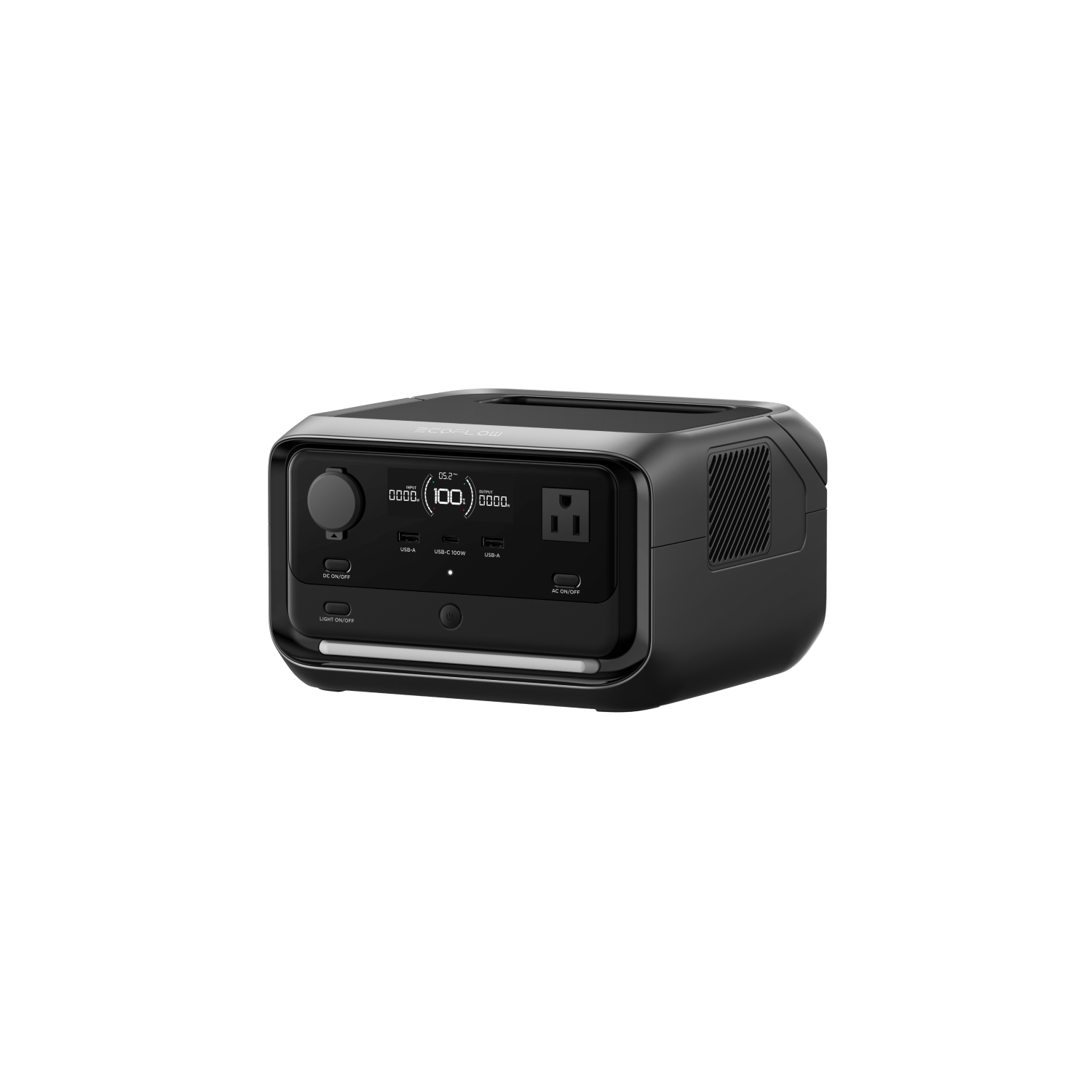
The River 3 Plus is EcoFlow’s entry-level model. At 286 Wh it is the smallest unit in the lineup and the lowest-priced option, making it a solid choice for charging phones, a CPAP machine, or a router/modem during a brief outage. Its “budget pick” badge reflects the trade-off: while the price is attractive, the capacity is insufficient for anything beyond a few minutes of fridge or sump-pump operation.
- Pros: Lowest capacity and price tier , sized for phones, a CPAP, or a router/modem through a short outage.
- Cons: 286 Wh will not run a fridge or sump pump for more than a short stretch.
- Best for: Small-load, short-duration backup (electronics, medical devices, communications).
- Verdict: The floor of this lineup , good for the smallest continuous-watt loads over the shortest durations.
If your continuous-watt calculation lands under 50 W and you only need an hour or two of backup, the River 3 Plus will meet the need without breaking the bank.
DELTA 3 Max Series Portable Power Station
Price: $899 | Capacity: 2048 Wh | Chemistry: LiFePO₄ | Badge: Best Value
The DELTA 3 Max moves the conversation into the “real household” zone. With 2048 Wh of stored energy and LiFePO₄ chemistry, it can sustain several essential circuits, refrigerator, a few lights, and a router, for multiple hours. The “best value” badge reflects its balance of capacity, output, and price.
- Pros: Mid-tier capacity that covers several household circuits at once for a multi-hour outage.
- Cons: Still well below whole-home scale for a multi-day outage.
- Best for: A handful of household essentials (fridge, some lighting, a router) through a multi-hour outage.
- Verdict: The mid-point of this lineup, sized for a real household load mix rather than a single device.
For most families that want to keep the fridge running, lights on, and internet alive for 4-6 hours, the DELTA 3 Max hits the sweet spot between cost and capability.
DELTA 3 Ultra Series Portable Power Station
Price: $1,399 | Capacity: 3072 Wh | Badge: none
The DELTA 3 Ultra adds roughly 50 % more capacity than the Max model, extending run time on the same load mix without increasing the number of circuits you can power. It is the logical upgrade when the “how many hours” part of your calculation grows, but you are not yet demanding additional continuous-watt capacity.
- Pros: 50 % more capacity than the DELTA 3 Max for extending run time on the same load mix.
- Cons: Diminishing capacity-per-dollar versus the DELTA 3 Max at this step.
- Best for: Readers who did the continuous-watt math on the DELTA 3 Max and need more hours, not more circuits.
- Verdict: The right upgrade when the answer to “how many hours” grew, not when the answer to “how many watts” grew.
If your continuous-watt load stays under 1500 W but you need 8-10 hours of backup, the Ultra’s extra 1 kWh can be the difference between a cold fridge and a spoiled one.
F3800 Plus
Price: $2,399.99 | Capacity: 3840 Wh | Continuous output: 6000 W | Chemistry: LFP | Weight: 136.7 lb | Badge: Premium Pick
The Anker SOLIX F3800 Plus is the only unit in this guide that can comfortably handle very high-draw appliances. Its 6000 W continuous output, verified on the manufacturer’s page ³, means it can start a well pump, a sump pump, or the compressor of a central-air-conditioning system, tasks that would trip the protection on smaller units. The trade-off is weight: at 136.7 lb the unit is essentially stationary, suited for a garage or utility room rather than RV or camping use.
- Pros: 6000 W continuous output covers high-draw appliances (well pump, central AC compressor start) most units in this list cannot.
- Cons: 136.7 lb base unit is not portable in the RV/camping sense , this is a stationary-use pick.
- Best for: Households whose continuous-watt math includes a well pump, sump pump, or other high-draw fixed appliance.
- Verdict: The pick when the limiting number is continuous watts, not just watt-hours.
If your essential load includes a 4000-W well pump that draws a 5000-W surge at start-up, the F3800 Plus is the only model here that can guarantee operation without tripping.
DELTA Pro Ultra
Price: $3,799 | Capacity: 6144 Wh (base unit) | Expandable to: 90 kWh | Continuous output: 7200 W | Badge: Best Overall
The DELTA Pro Ultra sits at the top of the EcoFlow lineup. Its base unit already offers 6144 Wh and a 7200 W continuous rating, enough to run almost any single-circuit load. More importantly, the system is expandable to a massive 90 kWh by adding extra battery modules, turning it into a whole-home, multi-day backup solution. The “best overall” badge reflects this combination of high continuous power and scalable capacity, though reaching the 90 kWh figure requires additional purchases beyond the base price.
- Pros: 7200 W continuous covers nearly any single-circuit load; expandable to 90 kWh for multi-day, whole-home scale.
- Cons: Reaching the 90 kWh figure requires buying multiple expansion batteries beyond the base unit’s price.
- Best for: Readers whose “hours of backup needed” answer is measured in days, not hours.
- Verdict: The ceiling of this lineup for both continuous watts and total watt-hours once expanded.
For a family that wants to keep the entire house running, including HVAC, well pump, and multiple appliances, for 48 hours or more, the DELTA Pro Ultra (with added modules) is the only option that meets both the watt-hour and continuous-watt requirements.
Comparison at a glance
| Model | Capacity (Wh) | Continuous output (W) | Weight | Price | Ideal scenario |
|---|---|---|---|---|---|
| River 3 Plus | 286 | , (portable, low-draw) | Light | $279 | Phones, CPAP, router for under 2 h |
| DELTA 3 Max | 2048 | , (LiFePO₄) | Moderate | $899 | Essential circuits for 4-6 h |
| DELTA 3 Ultra | 3072 | , | Moderate | $1,399 | Same circuits, 8-10 h |
| F3800 Plus | 3840 | 6000 | 136.7 lb | $2,399.99 | High-draw appliance (well pump, AC) for 2-4 h |
| DELTA Pro Ultra | 6144 (base) | 7200 | Heavy (stationary) | $3,799 | Whole-home, multi-day backup (expandable to 90 kWh) |
The capacity range spans roughly 21 ×, from the pocket-size River 3 Plus to the expandable DELTA Pro Ultra. Continuous-output ratings jump from “none listed” on the smaller EcoFlow models to 6000 W on the Anker and 7200 W on the DELTA Pro Ultra, illustrating why the latter two are the only choices when a single appliance’s surge exceeds 1500 W.
Answering the common buyer questions
1. How do I figure out how many watt-hours I need without an appliance chart?
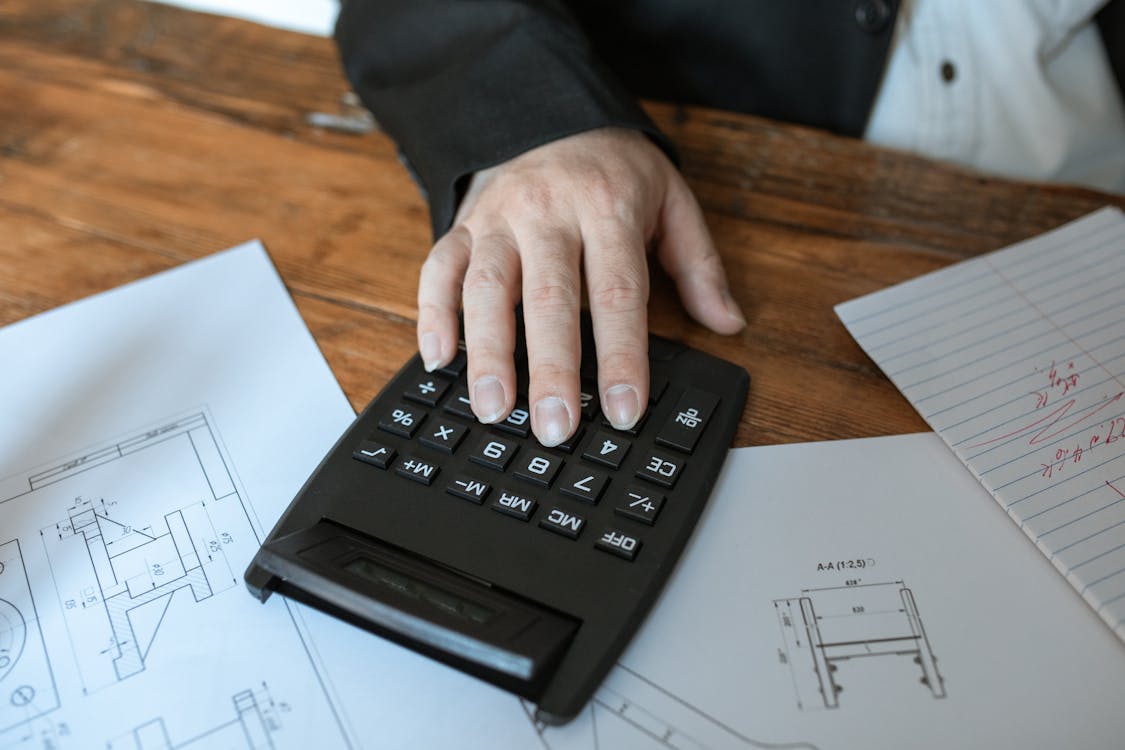
Start by listing every device you want to keep running during an outage. Look at each device’s nameplate for its continuous wattage (often listed as “W” or “VA”). Add those numbers together to get the total continuous load. Then decide how many hours you need that load sustained. Multiply the total continuous watts by the desired hours to get the required watt-hours (Wh). For example, a 150 W fridge plus a 30 W router equals 180 W; 5 hours of backup requires 180 W × 5 h = 900 Wh.
2. What’s the difference between continuous watts and surge watts, and why does it matter?
Continuous watts are the steady-state power a device draws once it’s running. Surge watts (or start-up watts) are the brief spike when motors or compressors first engage, often 2-5 × the continuous rating. A power station must be able to supply the surge wattage; otherwise the unit will shut down or trip its internal protection. This is why the F3800 Plus’s 6000 W continuous rating (and implied surge capacity) is critical for well pumps that may draw several thousand watts for a few seconds.
3. Is average household kWh usage useful for sizing a backup battery?
The EIA reports an average residential consumption of 10,791 kWh per year, or about 29.6 kWh per day ¹. That figure represents total household electricity, not the subset you would actually run during an outage. Using the whole-house average as a target would dramatically oversize any portable unit and inflate cost. Instead, focus on the specific essential loads you plan to keep alive; the average figure is only a sanity check that your calculation is in the right ballpark.
4. How many hours of backup should I plan for?
The answer depends on your local grid reliability and the criticality of each load. A common rule of thumb is 4-6 hours for short, unexpected outages, which covers most storms. If you live in an area with frequent multi-day blackouts, aim for 12-24 hours or more, which pushes you into the expandable-capacity tier (e.g., DELTA Pro Ultra with extra batteries).
5. When does continuous wattage matter more than total capacity?
When a single appliance’s surge exceeds the continuous-output rating of a power station, the unit will never start that appliance, regardless of how many watt-hours it stores. High-draw devices such as well pumps, sump pumps, and HVAC compressors often have surge demands of 4000-6000 W. In those cases, a unit like the F3800 Plus (6000 W continuous) or DELTA Pro Ultra (7200 W continuous) is required, even if the total Wh needed for the desired backup duration is modest.
What we would buy
For the majority of homeowners who need to keep a refrigerator, a few lights, a router, and perhaps a CPAP machine running for a typical storm-duration outage (4-6 hours), the EcoFlow DELTA 3 Max offers the best balance of price, capacity, and portability. It delivers enough watt-hours to cover essential loads without the premium price of the Ultra or the heavy weight of the Anker unit.
If your load list includes a high-draw well pump or central-AC starter, the Anker SOLIX F3800 Plus becomes the only viable choice because its 6000 W continuous output clears the surge hurdle. For those who envision multi-day, whole-home resilience, including heating, cooling, and multiple appliances, the EcoFlow DELTA Pro Ultra (with added expansion batteries) is the only model that can scale to that level of demand.
Finally, for ultra-light, short-duration needs, such as keeping a phone charger and a CPAP alive during a brief brownout, the EcoFlow River 3 Plus remains the most economical entry point.
By matching your continuous-watt and hours-of-backup calculations to the specifications above, you can select the unit that meets your real-world needs without overpaying for unused capacity.
Detailed Reviews
RIVER 3 Plus Portable Power Station
EcoFlow · $279
Small-load, short-duration backup (electronics, medical devices, communications)
What We Like
- Lowest capacity and price tier — sizes for phones, a CPAP, or a router/modem through a short outage
- Price verified on the product page on 2026-09-05
Could Be Better
- 286Wh will not run a fridge or sump pump for more than a short stretch
Key Specs
The floor of this lineup — good for the smallest continuous-watt loads over the shortest durations.
See price at EcoFlow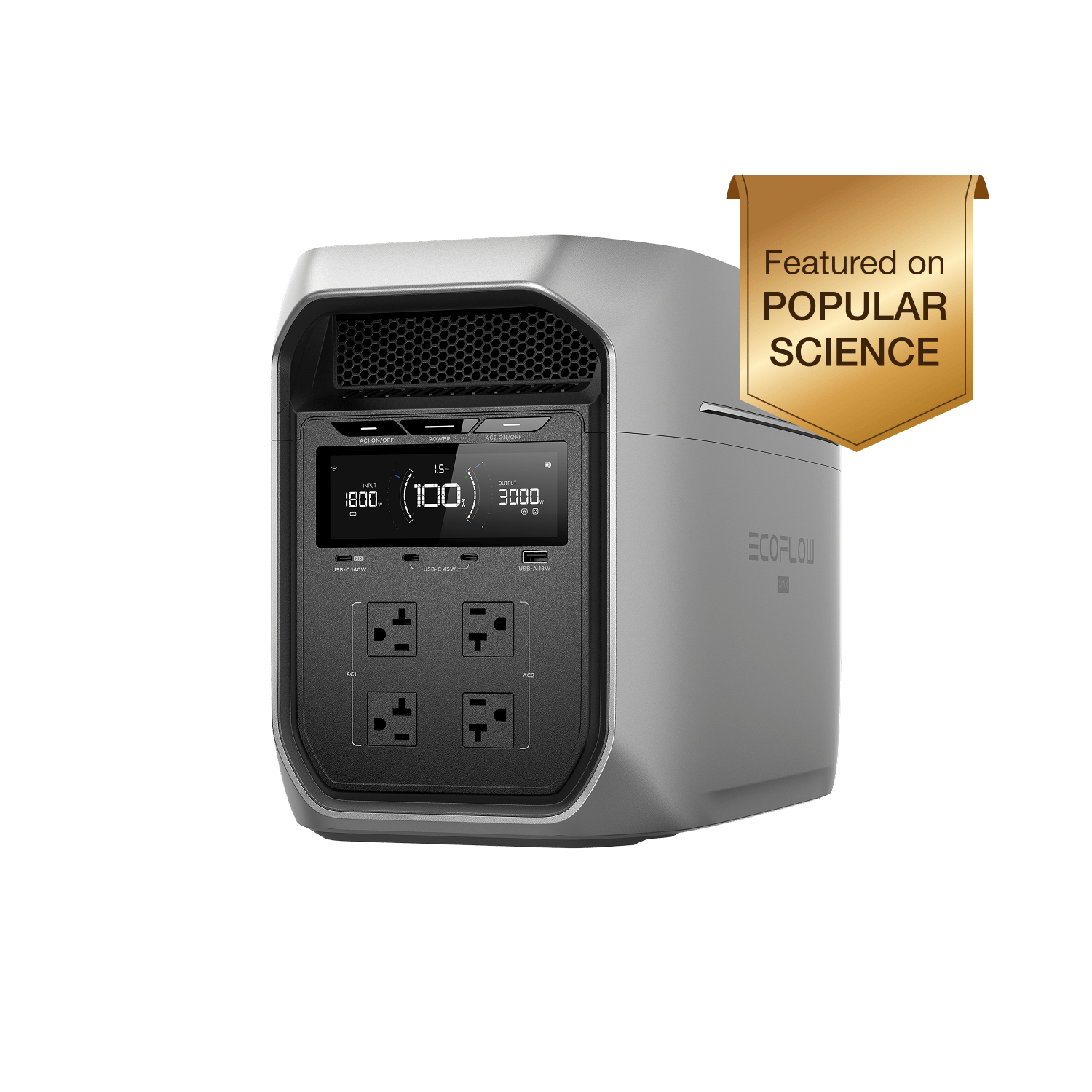
DELTA 3 Max Series Portable Power Station
EcoFlow · $899
A handful of household essentials (fridge, some lighting, a router) through a multi-hour outage
What We Like
- Mid-tier capacity that covers several household circuits at once for a multi-hour outage
- Price verified on the product page on 2026-09-05
Could Be Better
- Still well below whole-home scale for a multi-day outage
Key Specs
The mid-point of this lineup, sized for a real household load mix rather than a single device.
See price at EcoFlow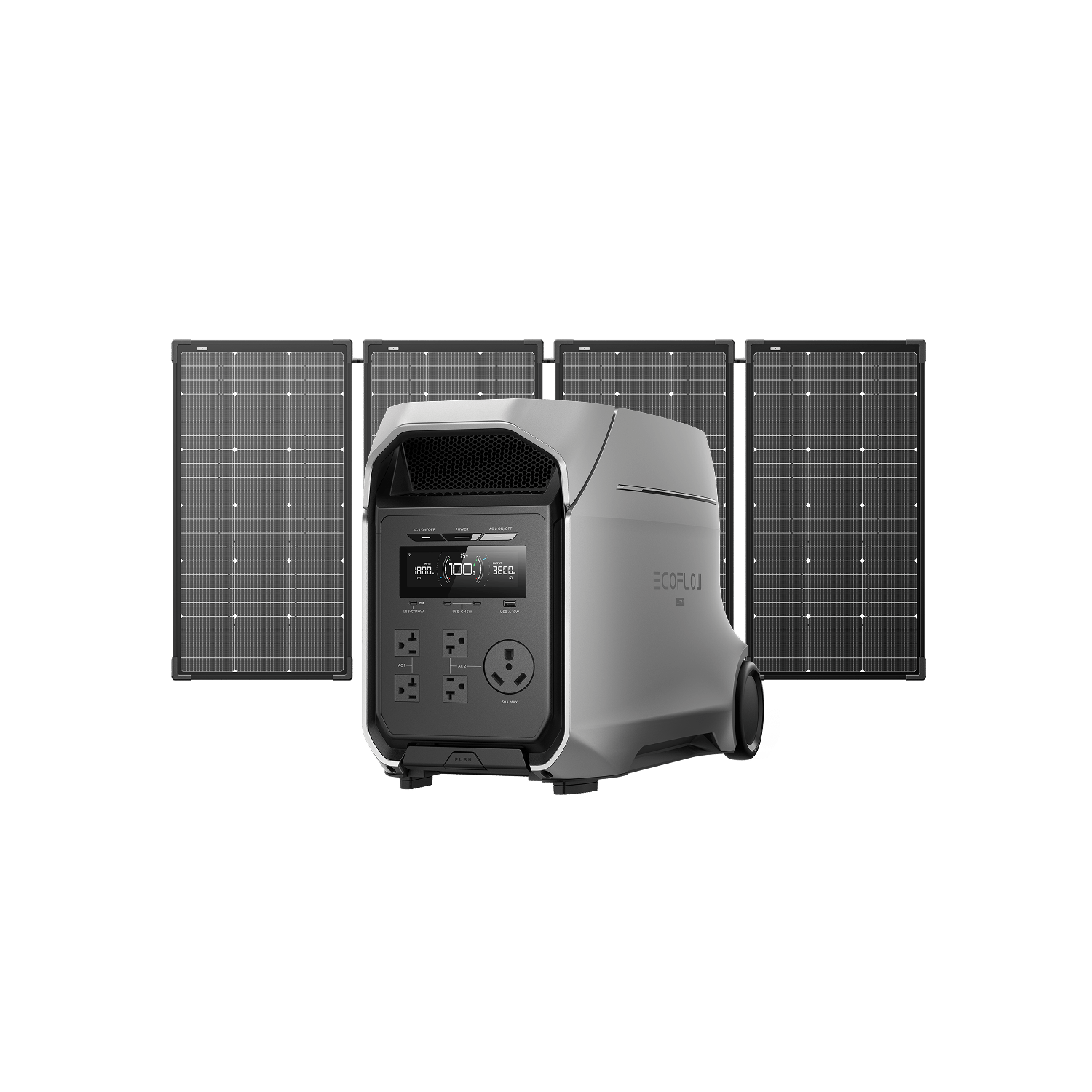
DELTA 3 Ultra Series Portable Power Station
EcoFlow · $1,399
Readers who did the continuous-watt math on the DELTA 3 Max and need more hours, not more circuits
What We Like
- 50% more capacity than the DELTA 3 Max for extending run time on the same load mix
- Price verified on the product page on 2026-09-05
Could Be Better
- Diminishing capacity-per-dollar versus the DELTA 3 Max at this step
Key Specs
The right upgrade when the answer to 'how many hours' grew, not when the answer to 'how many watts' grew.
See price at EcoFlow
F3800 Plus
Anker · $2,399.99
Households whose continuous-watt math includes a well pump, sump pump, or other high-draw fixed appliance
What We Like
- 6000W continuous output covers high-draw appliances (well pump, central AC compressor start) most units in this list cannot
- Price verified on the product page on 2026-09-05
Could Be Better
- 136.7lb base unit is not portable in the RV/camping sense — this is a stationary-use pick
Key Specs
The pick when the limiting number is continuous watts, not just watt-hours.
See price at Anker SOLIX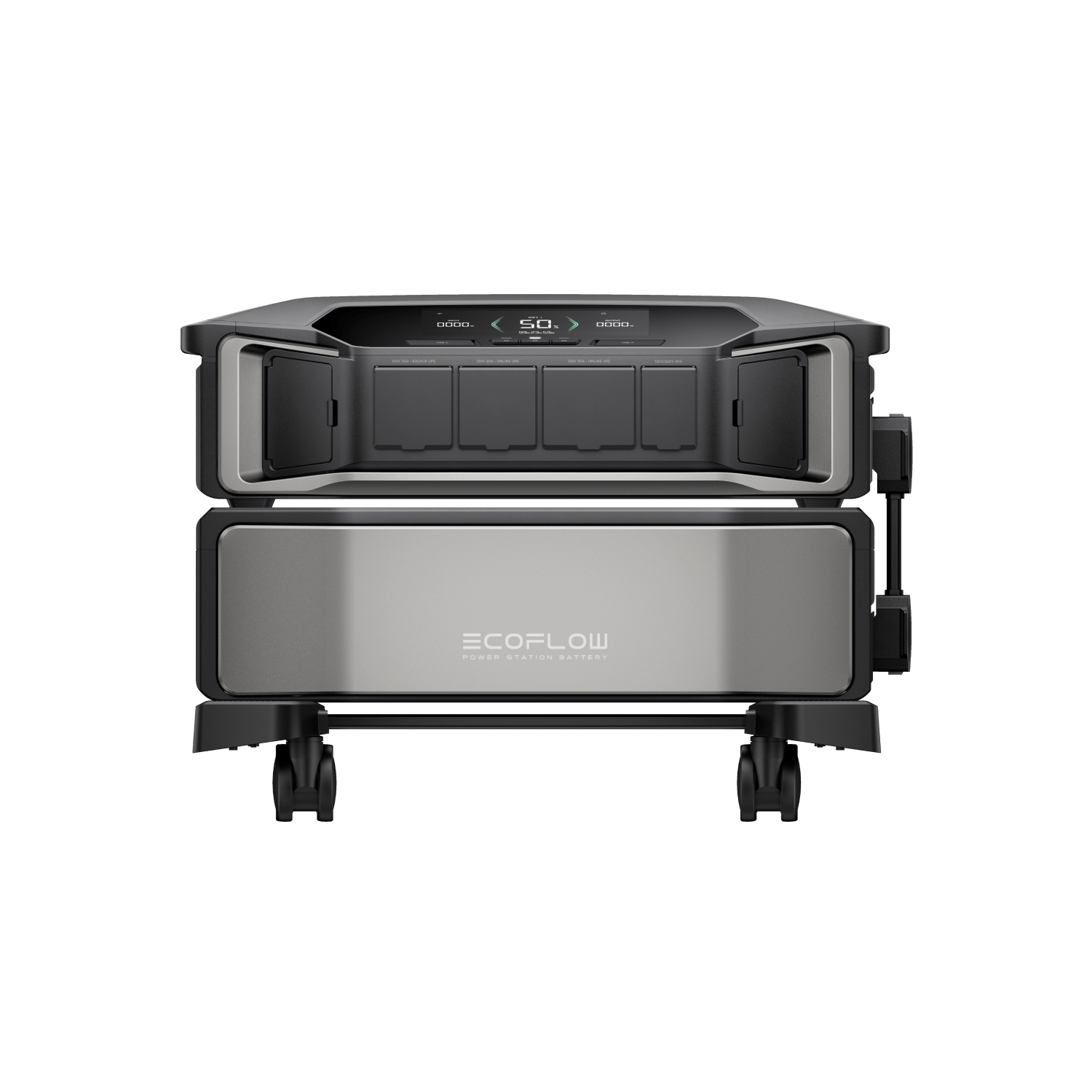
DELTA Pro Ultra
EcoFlow · $3,799
Readers whose 'hours of backup needed' answer is measured in days, not hours
What We Like
- 7200W continuous covers nearly any single-circuit load; expandable to 90kWh for multi-day, whole-home scale
- Price verified on the product page on 2026-09-05
Could Be Better
- Reaching the 90kWh figure requires buying multiple expansion batteries beyond the base unit's price
Key Specs
The ceiling of this lineup for both continuous watts and total watt-hours once expanded.
See price at EcoFlowProduct Comparison
| Product | Price | Rating | Reviews | Best For | Buy |
|---|---|---|---|---|---|
| RIVER 3 Plus Portable Power Station EcoFlow | $279 | 4.5 | — | Small-load, short-duration backup (electronics, medical devices, communications) | EcoFlow |
| DELTA 3 Max Series Portable Power Station EcoFlow | $899 | 4.5 | — | A handful of household essentials (fridge, some lighting, a router) through a multi-hour outage | EcoFlow |
| DELTA 3 Ultra Series Portable Power Station EcoFlow | $1,399 | 4.5 | — | Readers who did the continuous-watt math on the DELTA 3 Max and need more hours, not more circuits | EcoFlow |
| F3800 Plus Anker | $2,399.99 | 4.5 | — | Households whose continuous-watt math includes a well pump, sump pump, or other high-draw fixed appliance | Anker SOLIX |
| DELTA Pro Ultra EcoFlow | $3,799 | 4.5 | — | Readers whose 'hours of backup needed' answer is measured in days, not hours | EcoFlow |
Get price-drop alerts and new guides from Outage Power Guide
One email a week: price drops on the gear we recommend, new guides, and what changed. No spam, unsubscribe anytime.